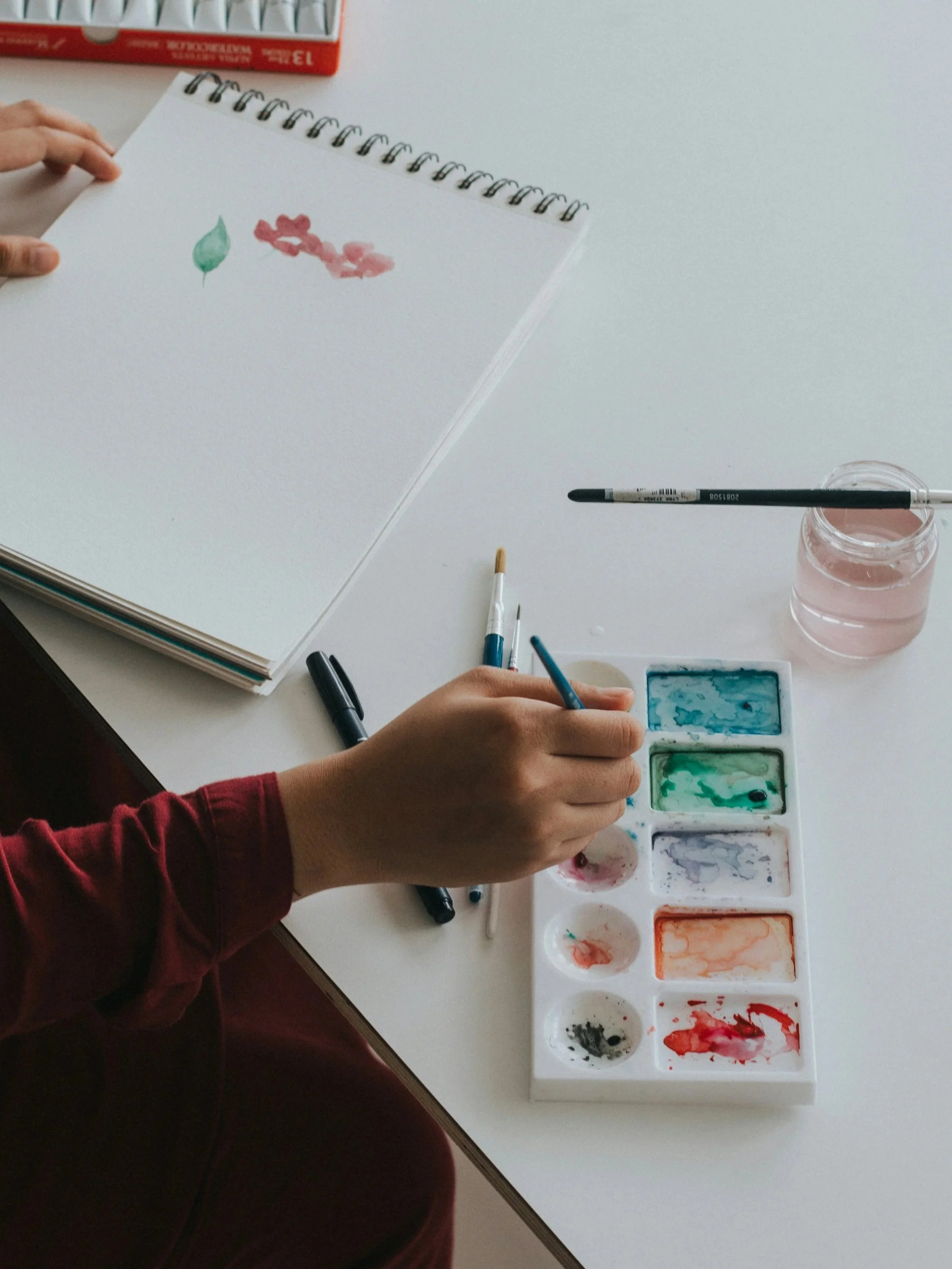
Art therapy integrates creative process and psychotherapy.
Art Therapy
“Art therapy combines the creative process and psychotherapy, facilitating self-exploration and understanding. Using imagery, colour and shape as part of this creative therapeutic process, thoughts and feelings can be expressed that would otherwise be difficult to articulate” (Canadian Art Therapy Association, 2017).
In practice, art therapy creates space for conversation and creative exploration. Sometimes insight emerges through dialogue. At other times, working with image, colour, or form allows experiences to be expressed and understood in ways that feel more accessible than words alone.
Why creativity can support therapeutic change
The creative process can offer a different pathway into emotional life.
Research suggests that working with art materials engages sensory, embodied, and non-verbal forms of expression that can support emotional regulation and meaning-making (Kapitan, 2012).
Art making may:
support reflection and insight
provide distance from overwhelming experience
allow symbolic expression of complex feelings
engage the body and senses in regulation
offer new perspectives on personal narratives
Because art-making can function as a non-verbal and tactile process, it may support expression and understanding in ways that complement traditional talk therapy
A collaborative and relational process
Art therapy is not about producing “good” artwork.
It is about using the creative process to explore inner experience within a supportive therapeutic relationship.
The presence of a trained therapist and the relational space of therapy are considered central to the effectiveness of art therapy, alongside the creative process itself (Kapitan 2012). Together, these elements can support reflection, integration, and emotional processing over time.
What art therapy can offer
Art therapy can support:
deeper self-understanding
expression of complex or hard-to-name feelings
integration after meaningful or intense experiences
nervous system regulation through sensory engagement
exploration of identity, grief, and life transitions
connection between inner experience and outer life
At its core, art therapy offers a space where image and language meet and where experience can be explored, witnessed, and gradually understood.